In stock
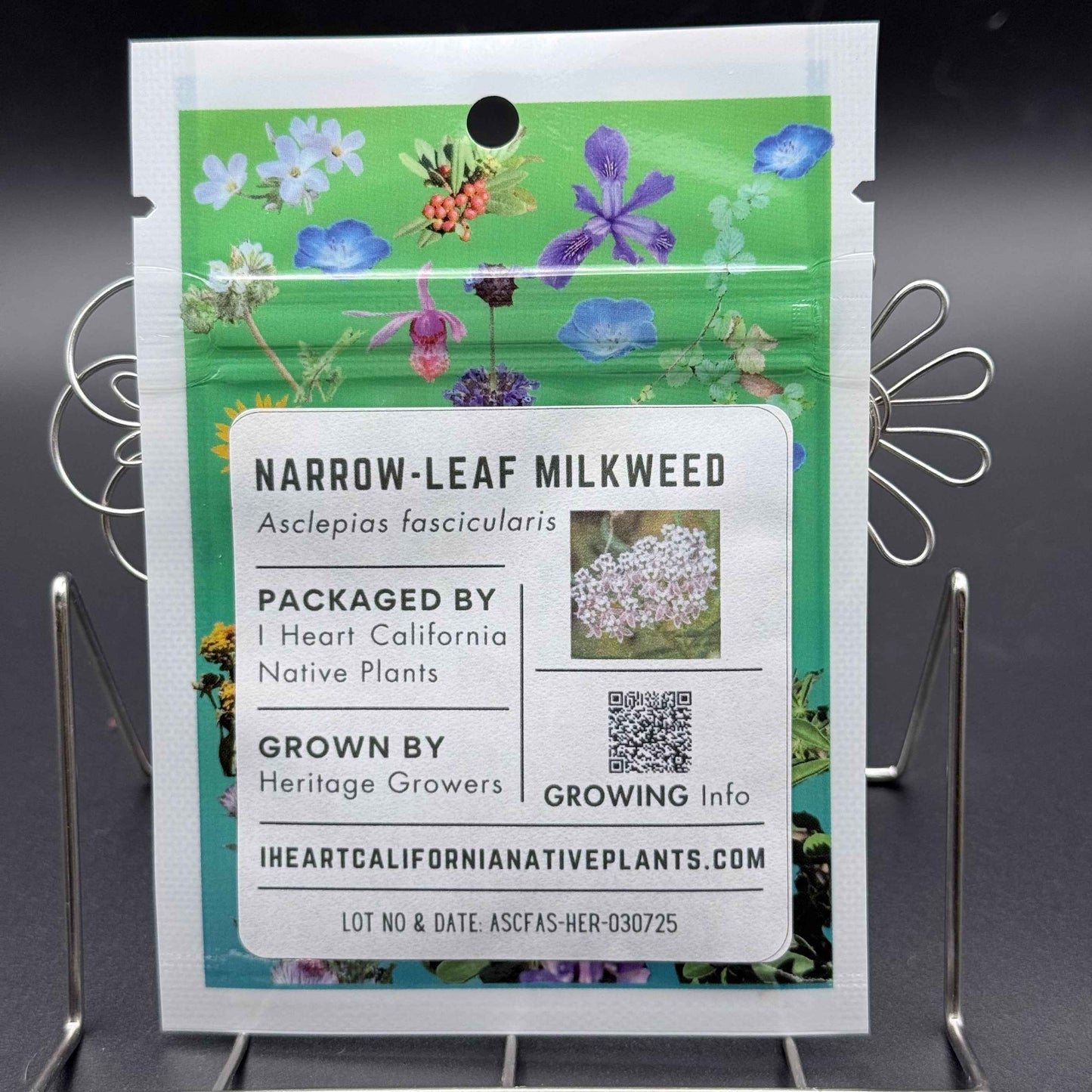
Asclepias fascicularis - Narrow-leaf milkweed
Asclepias fascicularis - Narrow-leaf milkweed
Couldn't load pickup availability
Species Name: Asclepias fascicularis - Narrow-leaf milkweed
Species Description (from Calscape): Asclepias fascicularis - Narrow-leaf milkweed is a flowering perennial best known for the Monarch butterflies it will attract into the garden. Its long, thin pointed leaves give the plant a soft, wispy look. It blooms in summer to fall, with clusters of lavender or pinkish white flowers, each one an interesting button shape. The fruits are smooth pods, which split open to spill seeds along with plentiful silky hairs that may carry the seeds through the air. This plant grows fast to 3 feet tall and is dormant in winter, often dying back to the ground. It will take full sun but is adaptable to most conditions, being easy to grow in soils with good drainage, even with no summer water. It can self-seed if the seed pods are not removed. This species is probably the single most important host plant for Monarch Butterflies in California, attracting them and hosting their caterpillars. It is crucial to not use any pesticide on or around the plant, because doing so will be fatal to the caterpillars. The plant also provides resources for many beneficial creatures, including native bees. Don't cut the dry stems down too soon as Orioles may use them for nesting (Calscape).
Grower: Heritage Growers
Amount of seed in packet: 5 grams
Other Names Used:
Family: Aponcynaceae
Life Cycle: Perennial
Plant Type: Herb
Sun Exposure: Full
Bloom Period: Summer, Fall
Bloom Color(s): Pink, cream
Plant Height: 24-36 inches tall
Plant Width: 12 inches wide
California Regions:
- San Francisco Bay Area
- North Coast
- Central Valley
- Sierra Foothills
- Sierra Nevada
- Central California Coast
- Southern Coast
- Southern California Inland
- Desert
Ecological Benefits:
- Deer resistant, attracts pollinators, birds, wildlife
Ecological Functions:
- Grows in Containers
Habitat Type:
- Chaparral
- Coastal Grassland
- Valley Grassland
- Oak Woodland
- Riparian
Skill Level: Beginner
Seed Pretreatment: None
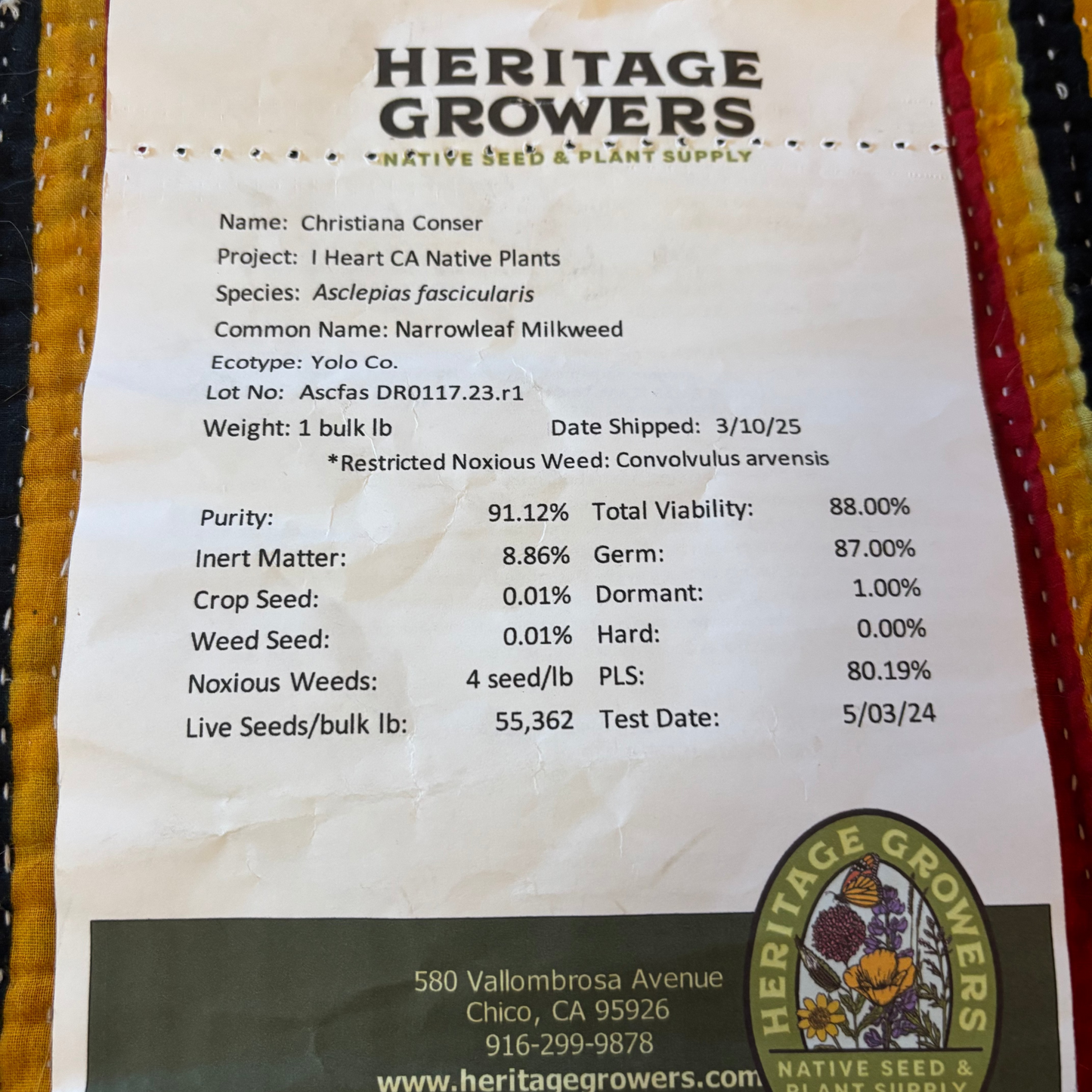
Germination Rate: 87%
Seed Germination Info:
|
Purity |
91.12% |
|
Inert matter |
8.86% |
|
Crop seed |
0.01% |
|
Weed seed |
0.01% |
|
Noxious weeds |
4 seed/lb |
|
Live seeds/bulk lb. |
55,362 |
|
Total viability |
88.00% |
|
Germ |
87.00% |
|
Dormant |
1.00% |
|
Hard |
0.00% |
|
PLS |
80.19% |
|
Test date |
5/3/24 |
Share